
Pinched Nerve in the Neck
A pinched nerve in the neck, also called cervical radiculopathy, happens when a nerve root is irritated or compressed as it leaves the spine. It can be linked to a bulging disc or age-related changes.
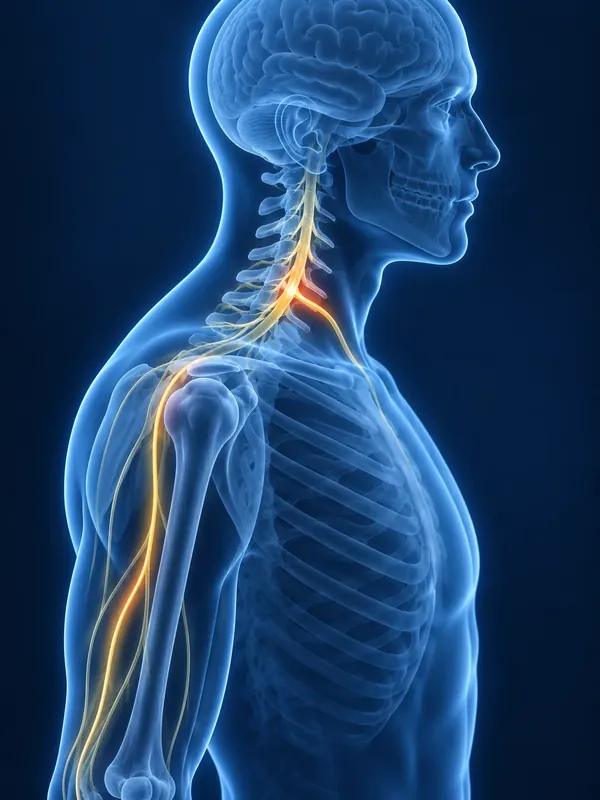
Many people describe neck pain along with tingling, numbness, or a burning feeling that travels into the shoulder, arm, or hand.
About pinched nerve in the neck
The symptoms often follow the path of the affected nerve, so where you feel them can help a provider work out which level of the neck is involved.
Causes vary from person to person, and a qualified healthcare provider can tell you what applies to you.
Common symptoms
- Neck pain, sometimes sharp
- Pain, burning, or tingling into the shoulder, arm, or hand
- Numbness in part of the arm or fingers
- Arm weakness or a heavy feeling
- Pain that changes with head position
Common causes
- A bulging or herniated disc in the neck
- Age-related changes and bone spurs
- Neck injury
- Prolonged poor posture
- Repetitive strain
How High-Pressure Cryotherapy (HPC) may help
High-Pressure Cryotherapy (HPC) uses high-pressure carbon dioxide (CO₂) to rapidly cool the skin over a specific treatment area. For a pinched nerve in the neck, treatment goes on the sore areas, often the neck and the tops of the shoulders. HPC does not release a nerve and does not claim to. For many people it may help manage pain and inflammation in the surrounding area, though results vary. A typical series is 4 to 5 sessions, then we reassess. Many patients report relief after one or two visits, although individual responses may vary. If there is no meaningful improvement after the series, see a qualified healthcare provider. HPC does not release a nerve. It treats the sore area, and for many people it may help manage pain and inflammation.
Every treatment begins with a free consultation. Typical treatment takes about 3–6 minutes per area. HPC is not a substitute for medical care and does not replace a diagnosis.
A drug-free, needle-free option
No drugs. No needles. No incisions. No downtime. And we only treat if we think we can help.
Talk with your doctor about the risks and benefits of any treatment.
Frequently asked questions
Can HPC release a pinched nerve?
No. HPC does not change what is pressing on the nerve. It treats the sore area, and for many people it may help with pain and inflammation. Results vary.
Is it safe if I have arm weakness or numbness?
New or worsening numbness, weakness, or changes in bladder or bowel control need prompt medical evaluation first. Please talk to your healthcare provider, and we will review your history with you at a free consultation.
How soon can I be seen?
Same-day appointments are often available at our Mineola and Rockville Centre locations. Book online or call and we will find the earliest time that works for you.
How many visits might I need?
For most people, we recommend an initial series of four to five sessions, then we check how you are doing. Many patients report relief after one or two visits, although individual responses may vary. Your plan depends on your situation, and we review how you are doing along the way. Results vary.
What does a visit cost?
The first treatment area is $90, with lower prices for additional areas, and discounted packages are available at our Rockville Centre location. See our pricing page for details.
This page is educational and is not medical advice. Individual results vary.
Related conditions

Neck Pain
Pain and stiffness involving the cervical spine.
Learn more →
Bulging & Herniated Disc
A spinal disc bulges or pushes out past its normal edge and can irritate nearby nerves.
Learn more →Cervical Stenosis
Narrowing in the neck portion of the spine that can crowd nearby nerves and cause neck, shoulder, or arm symptoms.
Learn more →What patients say
Mineola
Rockville Centre
Reviews are provided by Google. Individual experiences and results vary.
Ready to learn whether HPC may be right for you?
We'll discuss your symptoms, answer your questions, and determine whether treatment may be appropriate for your individual needs.