Frozen Shoulder or Rotator Cuff Problem? How to Tell the Difference
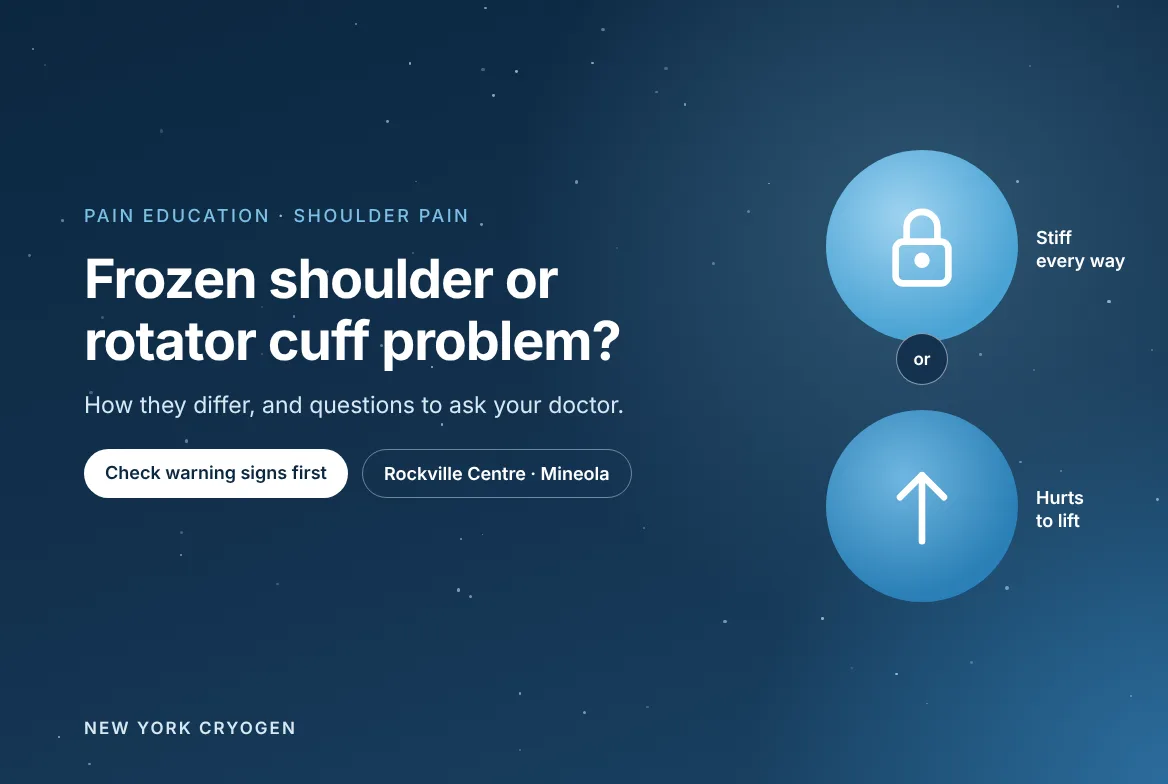
Two of the most common reasons a shoulder hurts and stops moving the way it used to are a frozen shoulder and a rotator cuff problem. They can feel alike at first. One useful clue, covered below, is what happens when someone else lifts your arm for you.
See a doctor first if you notice these
Most shoulder pain is not an emergency, but some symptoms need a doctor before you try anything else. Get medical care promptly for shoulder pain after a fall or injury, a sudden loss of strength, a shoulder that looks out of place, fever or a hot, red, swollen joint, or pain that spreads down the left arm with chest pain, sweating or shortness of breath, which needs emergency care.
What a frozen shoulder is
A frozen shoulder, which doctors call adhesive capsulitis, is a condition where the tissue around the shoulder joint becomes tight and stiff. People usually notice pain first, then a steady loss of movement, especially reaching behind the back, turning the arm outward, or lifting it overhead. Sleeping on that side often hurts.
It tends to come on gradually, often without a clear injury. It is more common in adults in midlife and in people with diabetes, and it can take many months to settle. Your doctor is the right person to confirm it and to guide your plan.
What a rotator cuff problem is
The rotator cuff is a group of muscles and tendons that hold the arm in the shoulder socket and help you lift and rotate it. Irritation, inflammation or a tear in those tendons usually causes pain with lifting or reaching, pain at night, and sometimes weakness. Our guide to rotator cuff tears, from partial to full explains how mild and severe problems differ.
Many everyday shoulder aches that people link to the rotator cuff are really irritation from overuse, as described in our post on shoulder pain when you reach overhead.
Clues that help tell them apart
None of these settles it on its own, and the two can overlap, but they are useful things to tell your doctor:
- Frozen shoulder: the joint feels stiff in every direction, and it is stiff even when someone else tries to move your arm for you
- Rotator cuff problem: pain and weakness when you lift or reach, while the joint may move more freely when someone else moves it
- Frozen shoulder: movement tends to be lost gradually over weeks, often with no clear injury
- Rotator cuff problem: it may start after a fall, a heavy lift or repeated overhead work, though it can also build slowly
- Both: pain at night, especially when lying on the sore side, is common, as covered in [why your shoulder hurts at night](/pain-education/shoulder-pain-at-night/)
Questions to ask your doctor
A short list can make the visit more useful:
- What do you think is causing my shoulder pain and stiffness?
- Do I need imaging, and what would it tell us?
- Which movements should I keep doing, and which should I avoid for now?
- Would physical therapy help, and how soon should I start?
- What warning signs would mean I should come back sooner?
Where High-Pressure Cryotherapy fits
HPC is a clinic-based, needle-free and drug-free treatment. High-pressure CO₂ delivers intense cold to the skin over the sore area of the shoulder in short intervals, with the skin temperature checked in between. Active treatment takes about 3 to 6 minutes per area.
It may help manage pain and inflammation-related symptoms around the shoulder, whether the pain is linked to an irritated rotator cuff or to a stiff, sore shoulder. It does not repair a torn tendon, and it does not loosen a stiff joint or change the underlying condition. It is not a replacement for medical care, or for the exercises and physical therapy your doctor or therapist recommends.
Our shoulder pain page covers the shoulder problems we see most often and who we can and cannot treat.
Two clinics: Rockville Centre and Mineola
For a shoulder, wear a tank top or a loose shirt, or bring one to change into, since the area needs to be uncovered. You can be seen inside Sportset in Rockville Centre or inside Siege Athletics in Mineola. At both, every visit starts with a free consultation, where we ask where it hurts, what you have been told it is, and what you have already tried. If you are a good candidate and comfortable going ahead, treatment can happen in the same visit. A first visit usually runs 10 to 20 minutes including the consultation, and same-day appointments are often available.
Keep following your doctor's guidance, and tell us about any medication you take. After shoulder surgery we need your surgeon's clearance and at least 10 days since the procedure, and we never treat over an incision or wound.
How High-Pressure Cryotherapy may fit
If your shoulder is keeping you up at night or making it hard to reach, and you would like something without needles or medication alongside your regular care, ask about HPC at our Rockville Centre or Mineola clinic. The consultation is free, we only treat if we think we can help, and if what you describe needs a doctor first, we will say so.
HPC is not a substitute for medical care and does not replace a diagnosis.
Frequently asked questions
How do I know if I have a frozen shoulder or a rotator cuff problem?
Only a clinician can tell. In general, a frozen shoulder stiffens the joint in every direction, even when someone else moves your arm, while a rotator cuff problem more often causes pain and weakness when you lift or reach. Bring your symptoms and any imaging to your doctor.
Can High-Pressure Cryotherapy help a frozen shoulder?
HPC may help manage pain and inflammation-related symptoms around a sore shoulder. It does not loosen a stiff joint or change the underlying condition, and results vary. Your doctor leads your care.
Can HPC repair a rotator cuff tear?
No. HPC does not repair torn tendons. For milder irritation it may help manage pain and inflammation-related symptoms. Larger tears, or tears with real weakness, usually need an orthopedic evaluation first.
How many HPC sessions would my shoulder need?
Plans usually range from 2 to 5 sessions. The number varies from person to person, depending on the issue and level of pain. We talk it through at your free consultation.
Is the treatment needle-free?
Yes. HPC is needle-free and drug-free. It uses high-pressure CO₂ to cool the skin over the sore area for about 3 to 6 minutes per area.
Where can I get HPC for shoulder pain on Long Island?
At both New York Cryogen clinics: Rockville Centre (inside Sportset) and Mineola (inside Siege Athletics). You can choose either one. Every visit starts with a free consultation, and same-day appointments are often available.
What happens at a first visit?
Every visit starts with a free consultation, a conversation where you ask questions and we explain the process. If you are comfortable, treatment can happen in the same session. Treatment takes about 3 to 6 minutes per area, and a first visit usually runs 10 to 20 minutes including the consultation. Same-day appointments are often available.
This article is educational and is not medical advice. Individual results vary.
More from Pain Education
Shoulder Pain When You Reach Overhead: Common Causes and Next Steps
Why shoulders hurt with lifting and reaching, what to ask a doctor, and how High-Pressure Cryotherapy may help with pain and inflammation.
Read more →Why Does My Shoulder Hurt at Night? Sleep Positions and What to Ask
Why shoulder pain is often worse at night, which sleep habits can help, when to be evaluated, and how High-Pressure Cryotherapy may help.
Read more →How Do I Know If a Pain Treatment Is Right for Me? A Practical Checklist
A simple way to judge any pain treatment before you commit: what to ask, what to track, and the warning signs of a treatment that is not a good fit.
Read more →What patients say
Mineola
Rockville Centre
Reviews are provided by Google. Individual experiences and results vary.