Inner Elbow Pain From Lifting and the Gym: What Is Going On?
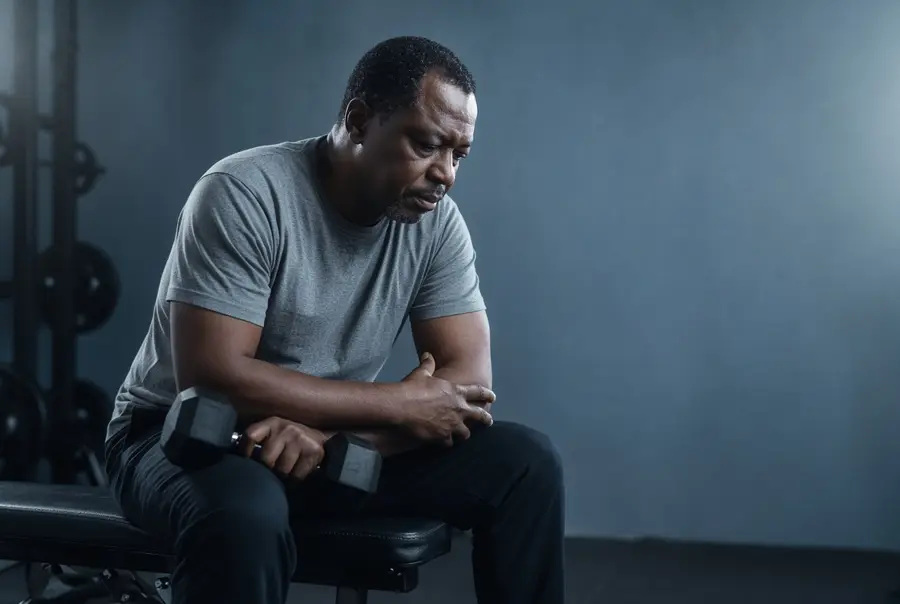
Curls, rows, pull-ups, and heavy carries all ask the forearm to grip hard, and the tendon on the inside of the elbow takes much of that load. Sometimes it keeps up. Sometimes it does not.
Why the inner elbow gets overloaded
The muscles that flex the wrist and grip attach to the bony bump on the inside of the elbow. Heavy pulling, curling, deadlifts with a strong grip, and carrying heavy loads all work those muscles hard. When training load rises faster than the tendon adapts, it can become sore.
Training habits that can contribute
Commonly mentioned factors include:
- A sudden jump in volume or intensity
- Very tight or prolonged gripping, especially under fatigue
- Curling or pulling with the wrist flexed and the elbow in an awkward position
- Too little recovery between hard sessions
- Technique faults that shift load to the forearm
What it feels like
Typical signs are pain and tenderness on the inner elbow, discomfort that may travel along the forearm, a weaker grip, and soreness with heavy pulling or curling. It may start as a warm-up ache that fades, then become more persistent.
Tingling in the fingers
Some people notice tingling in the ring and little fingers. The ulnar nerve runs close to the inner elbow and can be irritated at the same time. Tingling or numbness that persists should be evaluated by a healthcare professional.
Get evaluated first if
See a healthcare professional promptly for:
- Pain after a sudden pop or injury during a lift
- Visible deformity or marked swelling
- Persistent numbness or tingling, or worsening hand weakness
- Fever, redness, or warmth over the joint
Working with a coach or therapist
A coach, trainer, or physical therapist can watch your lifts and suggest changes to grip, volume, and technique. Ask your provider and your physician what suits your situation. Keep a simple training log so you can see when the pain began relative to changes in your program.
Recovery between sessions
Tendons adapt more slowly than muscles, so a program that feels fine for the muscles may still outrun the tendon. Allowing enough recovery between heavy pulling sessions, and not stacking several grip-heavy exercises on the same day, are commonly discussed. A coach or therapist can look at how your week is structured.
Questions worth asking
Ask your clinician what is behind the pain, whether the nerve could be involved, which exercises to modify, and how you will both know whether things are improving. Bring your training log, since the timing of the pain relative to program changes is often the most useful clue.
What to tell your doctor
Describe where the pain sits, which lifts or tasks bring it on, when it started relative to any change in your program, and whether you have any tingling or numbness in the hand. Mention past elbow injuries and any treatments you have tried. That history shapes what is likely and what is appropriate, and it lets your clinician tell this apart from a nerve problem.
If your clinician suggests ice or cold therapy
Ice is the best-known form of cold therapy, and many clinicians suggest it for sore, irritated areas. HPC is also a form of cold therapy, applied differently: high-pressure CO₂ rapidly cools the skin over the area, with an intense cold that passes quickly. A treatment takes about 3 to 6 minutes per area, where an ice pack session is often 15 to 20 minutes.
If your doctor has recommended ice or cold therapy for your problem, ask whether HPC may be a good fit. Results vary, and HPC is not a substitute for medical care.
What a visit with us looks like
Every visit starts with a free consultation. We ask where it hurts, what you have been told it is, what you have already tried, and whether anything about your health or history means we should not treat. If you are comfortable and it is appropriate, treatment can be done in the same session.
Treatment itself is brief. High-pressure CO₂ is used to rapidly cool the skin over the inner elbow and forearm, usually about 3 to 6 minutes per area, and a first visit typically takes 10 to 20 minutes including the consultation. There are no needles and no medication. Most people describe an intense cold that passes quickly. Same-day appointments are often available at our Mineola and Rockville Centre locations.
How many visits, and what about the next flare?
For most people, we recommend an initial series of four to five sessions, then we check how you are doing. Many patients report relief after one or two visits, although individual responses may vary. After the series, we suggest watching to see whether and when the pain returns.
If it does come back, we suggest coming in at the first sign instead of waiting for it to build. Many times a tune-up of 1 or 2 sessions is enough. Discounted packages are available at our Rockville Centre location if you expect to come in more than once.
How High-Pressure Cryotherapy may fit
HPC uses high-pressure CO₂ to rapidly cool the skin over the inner elbow. It may help with pain and inflammation so that gripping and pulling feel more comfortable. Training load and technique still matter, because the tendon can be irritated again if the pattern that caused it continues.
It does not replace changes to your training. It treats the sore inner elbow, and for many people it may help manage inflammation and symptoms.
HPC is not a substitute for medical care and does not replace a diagnosis.
Frequently asked questions
Do I have to stop lifting?
Activity guidance depends on you. Ask your provider and your physician about what is appropriate.
Is this the same as tennis elbow?
It is the mirror image: golfer's elbow is on the inside of the elbow, tennis elbow on the outside.
How many visits might it take?
For most people, we recommend an initial series of four to five sessions, then we check how you are doing. Many patients report relief after one or two visits, although individual responses may vary.
What happens at a first visit?
Every visit starts with a free consultation, a conversation where you ask questions and we explain the process. If you are comfortable, treatment can happen in the same session. Treatment takes about 3 to 6 minutes per area, and a first visit usually runs 10 to 20 minutes including the consultation. Same-day appointments are often available.
This article is educational and is not medical advice. Individual results vary.
More from Pain Education
Inner Elbow Pain: Is It Golfer's Elbow?
What golfer's elbow feels like, who gets it, when tingling needs evaluation, and how High-Pressure Cryotherapy may help.
Read more →Tennis Elbow Without the Tennis: Why the Outside of Your Elbow Hurts
Everyday causes of lateral elbow pain and how High-Pressure Cryotherapy may help with pain and inflammation on Long Island.
Read more →Elbow Pain From Typing and Desk Work: Is It Tennis Elbow?
How keyboard, mouse, and manual work can irritate the outer elbow, what to look at in your setup, and how High-Pressure Cryotherapy may help.
Read more →What patients say
Mineola
Rockville Centre
Reviews are provided by Google. Individual experiences and results vary.