
Why Is My Knee Swollen? Common Causes and When to Be Seen
A knee that looks puffy, feels tight when you bend it, or leaves a bulge you can see is telling you something. The trick is working out whether it is a sore joint that needs care or a sign that should be looked at promptly.
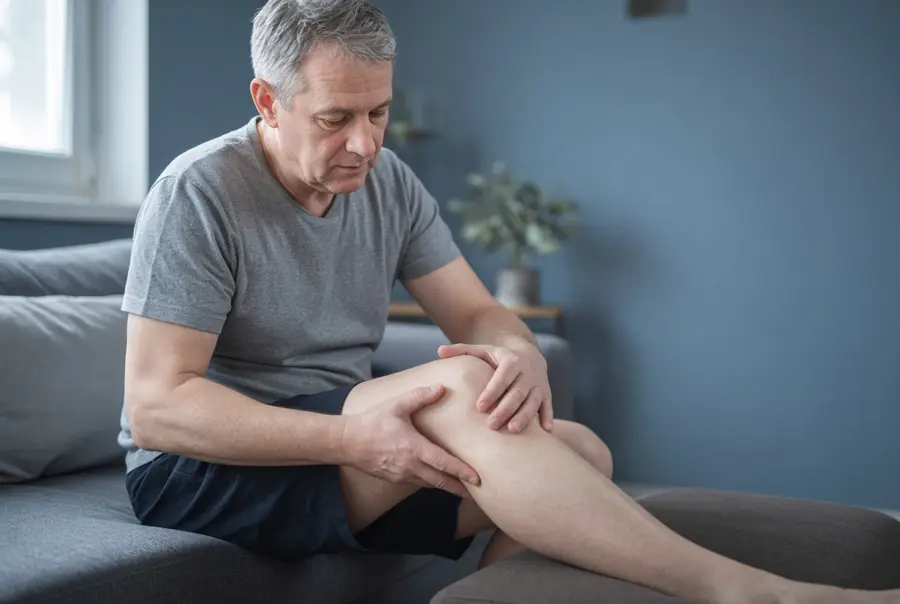
What swelling tells you
Swelling is the body's response to irritation or injury. In the knee it can be fluid inside the joint, sometimes called water on the knee, or swelling in the soft tissues and bursae around it. How fast it appeared and what came before it are two of the most helpful clues.
Swelling that comes on quickly
Swelling that appears within hours of a twist, fall, or impact can point to an injury inside the joint, such as a ligament or meniscus tear. That is the kind of swelling that deserves a prompt medical evaluation, especially if the knee feels unstable, locks, or will not bear weight.
Swelling that builds slowly
Swelling that gradually builds over days or weeks is more often linked to:
- Osteoarthritis, particularly after a day of heavy activity
- Bursitis, with puffiness over the front of the kneecap or the inner side
- Tendon irritation from overuse
- Inflammatory arthritis or gout, which can also cause warmth and redness
- Fluid that accumulates in response to a chronic problem inside the joint
Get seen promptly if
Do not wait on these before any treatment:
- The knee swelled after an injury, especially with a pop or instability
- You cannot put weight on the leg
- There is fever, redness, or marked warmth, which can signal infection
- The knee is rapidly swelling or looks deformed
- There is sudden calf swelling, pain, or warmth, especially after surgery or a long trip
What to tell your doctor
Describe when the swelling started and how fast it came on, what you were doing, whether it goes down with rest, whether the knee locks or gives way, and any past knee problems or surgery. A photo of the knee at its worst can also help.
Living with it in the meantime
People often ask about rest, elevation, and compression. What is appropriate depends on the cause, so ask your doctor, especially if the swelling follows an injury. Avoid pushing through sharp pain, and keep track of how the knee feels the morning after activity.
Tracking the swelling
A simple routine helps: look at both knees side by side in the morning and evening, note whether the swollen knee feels warm compared with the other, and write down how far you can bend and straighten it. If you are unsure whether it is getting better or worse, those notes settle the question, and they give your clinician something concrete to work from.
If your clinician suggests ice or cold therapy
Ice is the best-known form of cold therapy, and many clinicians suggest it for sore, irritated areas. HPC is also a form of cold therapy, applied differently: high-pressure CO₂ rapidly cools the skin over the area, with an intense cold that passes quickly. A treatment takes about 3 to 6 minutes per area, where an ice pack session is often 15 to 20 minutes.
If your doctor has recommended ice or cold therapy for your problem, ask whether HPC may be a good fit. Results vary, and HPC is not a substitute for medical care.
What a visit with us looks like
Every visit starts with a free consultation. We ask where it hurts, what you have been told it is, what you have already tried, and whether anything about your health or history means we should not treat. If you are comfortable and it is appropriate, treatment can be done in the same session.
Treatment itself is brief. High-pressure CO₂ is used to rapidly cool the skin over the knee, usually about 3 to 6 minutes per area, and a first visit typically takes 10 to 20 minutes including the consultation. There are no needles and no medication. Most people describe an intense cold that passes quickly. Same-day appointments are often available at our Mineola and Rockville Centre locations.
Other areas can be treated in the same session when appropriate. If you have had a knee replacement, we need your surgeon's okay first, and we never treat over an incision.
How many visits, and what about the next flare?
For most people, we recommend an initial series of four to five sessions, then we check how you are doing. Many patients report relief after one or two visits, although individual responses may vary. After the series, we suggest watching to see whether and when the pain returns.
If it does come back, we suggest coming in at the first sign instead of waiting for it to build. Many times a tune-up of 1 or 2 sessions is enough. Discounted packages are available at our Rockville Centre location if you expect to come in more than once.
How High-Pressure Cryotherapy may fit
HPC uses high-pressure CO₂ to rapidly cool the skin over the knee. It may help with pain and inflammation and make stairs and walking more comfortable. We do not treat a knee that is hot, red, and rapidly swelling, or one that was just injured and has not been evaluated.
It does not remove the cause of the swelling, but it treats the sore area and may help many people manage inflammation and discomfort.
HPC is not a substitute for medical care and does not replace a diagnosis.
Frequently asked questions
Should I see a doctor for a swollen knee?
If it followed an injury, came on fast, or comes with fever, redness, warmth, or inability to bear weight, yes, promptly.
Can HPC reduce knee swelling?
It may help with pain and inflammation for some people, but results vary and depend on the cause.
What is water on the knee?
It is excess fluid in or around the joint, a sign of irritation. It has many possible causes, so a clinician should evaluate it.
What happens at a first visit?
Every visit starts with a free consultation, a conversation where you ask questions and we explain the process. If you are comfortable, treatment can happen in the same session. Treatment takes about 3 to 6 minutes per area, and a first visit usually runs 10 to 20 minutes including the consultation. Same-day appointments are often available.
This article is educational and is not medical advice. Individual results vary.
More from Pain Education
Knee Pain on the Stairs: What Might Be Behind It?
Common causes of knee pain, what to tell your doctor, and how High-Pressure Cryotherapy may help with knee pain and inflammation.
Read more →Is HPC Drug-Free and Needle-Free? What Treatment Actually Involves
A plain-language look at what happens during High-Pressure Cryotherapy, what is and is not involved, and what to know about safety.
Read more →Torn Meniscus: Mild Tears, Serious Tears and Where HPC May Fit
What a meniscus tear is, why mild and serious tears are handled differently, the signs that need a doctor first, and where a drug-free, needle-free option like HPC may fit.
Read more →What patients say
Mineola
Rockville Centre
Reviews are provided by Google. Individual experiences and results vary.