Plantar Fasciitis
Plantar fasciitis is a common cause of heel and arch pain from irritation of the plantar fascia, the band of tissue along the bottom of the foot.

That stabbing heel pain with your first steps in the morning, or after sitting for a while, is a familiar story for runners, walkers, and anyone on their feet all day.
About plantar fasciitis
Pain is often worst with the first steps in the morning or after long periods of standing.
Common symptoms
- Heel or arch pain
- Pain with the first steps of the day
- Tenderness after standing or activity
Common causes
- Overuse and repetitive impact
- Tight calf muscles
- Footwear and foot mechanics
- Long periods on hard surfaces
How the foot works, and why the heel hurts
The plantar fascia is a thick band of tissue under the foot that connects the heel to the toes and supports the arch. It takes your full weight with every step. When it is overloaded, it can become irritated where it attaches at the heel.
Common patterns
These are some of the patterns people describe:
- Sharp heel pain with the first steps in the morning, easing as you move.
- Pain that comes back after sitting for a while, or after a long day on your feet.
- Soreness after a jump in running, a new pair of shoes, or a new job on hard floors.
- Tight calves that pull on the heel.
- A heel spur seen on an X-ray, which can be present with or without pain.
What tends to make it better or worse
Walking barefoot on hard floors, unsupportive shoes, sudden jumps in activity and long hours standing tend to make it worse. Supportive footwear, calf stretching, easing back into activity and scheduling rest days often help.
When to see a provider first
Please get checked by a qualified healthcare provider before booking if any of these apply:
- You have numbness, tingling or burning in the foot.
- The pain is constant, including at night.
- There is swelling, bruising or a pop after an injury, or you cannot put weight on the foot.
- The area is red, hot or has an open sore.
- You have diabetes or reduced sensation in your feet. Talk to your provider first.
- You have had foot surgery recently and your surgeon has not cleared you.
Why people choose High-Pressure Cryotherapy (HPC) for plantar fasciitis
HPC is a drug-free approach. There are no drugs, no needles and no incisions, and sessions are quick, so it fits into a normal day.
- Drug-free, needle-free and incision-free.
- Treatment takes about 3 to 6 minutes per area.
- Your first visit includes a free consultation, and same-day appointments are often available.
- We only treat if we think we can help.
- It can be used alongside your existing care plan.
What a visit looks like
Every visit starts with a free consultation. We ask about your history, where it hurts and what you have already tried. A first visit usually takes 10 to 20 minutes including the consultation. Treatment itself takes about 3 to 6 minutes per area.
We recommend four to five sessions, then we reassess together. If there is no meaningful improvement, we suggest seeing a qualified healthcare provider. Results vary, and we only treat if we think we can help.
How High-Pressure Cryotherapy (HPC) may help
High-Pressure Cryotherapy (HPC) uses high-pressure carbon dioxide (CO₂) to rapidly cool the skin over a specific treatment area. For plantar fasciitis, treatment is applied to the sole and heel area and takes a few minutes. Many people tell us the heel feels less sore with those first steps in the morning, which may make walking and standing more comfortable. Results vary, and we only treat if we think we can help. If you would like to find out whether HPC may help your plantar fasciitis, the consultation is free and same-day appointments are often available. HPC does not correct the footwear or foot mechanics behind heel pain, but it treats the sore area and may help many people manage inflammation and symptoms.
Every treatment begins with a free consultation. Typical treatment takes about 3–6 minutes per area. HPC is not a substitute for medical care and does not replace a diagnosis.
A drug-free, needle-free option
For heel pain, HPC is a drug-free, needle-free option applied to the skin of the foot.
No drugs. No needles. No incisions. No downtime. And we only treat if we think we can help.
Talk with your doctor about the risks and benefits of any treatment.
Watch a treatment
Real New York Cryogen treatment footage. Treatment area, comfort, and results vary by patient. A free consultation helps determine whether this is a fit.
Inside a treatment
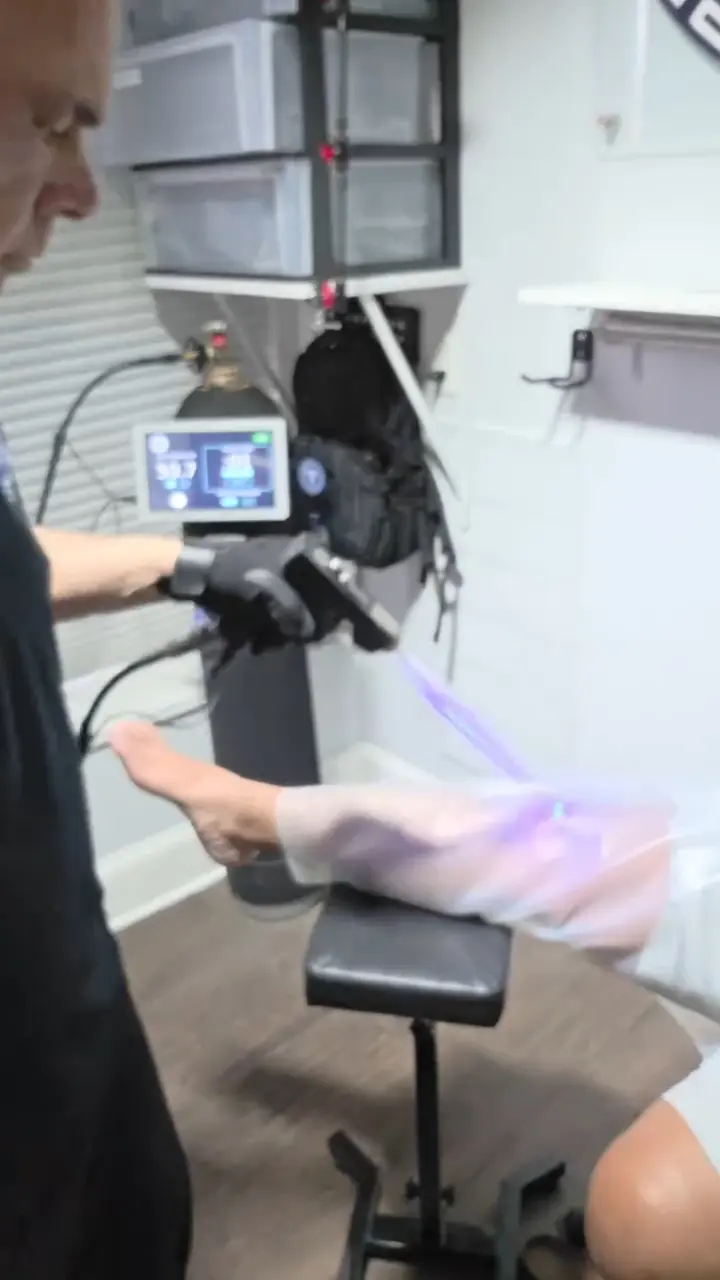
Real New York Cryogen treatment photos. Treatment area, comfort, and results vary by patient.
Frequently asked questions
Do I need to stop running?
Activity guidance depends on your situation. Discuss it with your provider and your physician.
How soon can I be seen?
Same-day appointments are often available at our Mineola and Rockville Centre locations. Book online or call and we will find the earliest time that works for you.
How many visits might I need?
For most people, we recommend an initial series of four to five sessions, then we check how you are doing. Many patients report relief after one or two visits, although individual responses may vary. Your plan depends on your situation, and we review how you are doing along the way. Results vary.
What does a visit cost?
The first treatment area is $90, with lower prices for additional areas, and discounted packages are available at our Rockville Centre location. See our pricing page for details.
This page is educational and is not medical advice. Individual results vary.
Thinking about a cortisone shot, or already had one? Read about cortisone injection alternatives.


What patients say
Mineola
Rockville Centre
Reviews are provided by Google. Individual experiences and results vary.
Ready to learn whether HPC may be right for you?
We'll discuss your symptoms, answer your questions, and determine whether treatment may be appropriate for your individual needs.