Achilles Tendonitis: Symptoms, Causes, and When to Get It Checked
The Achilles is the thick tendon at the back of the ankle that connects the calf to the heel. It takes a beating in running, jumping, and even plain walking, so it is one of the most common places for tendon pain.
What it feels like
People typically describe:
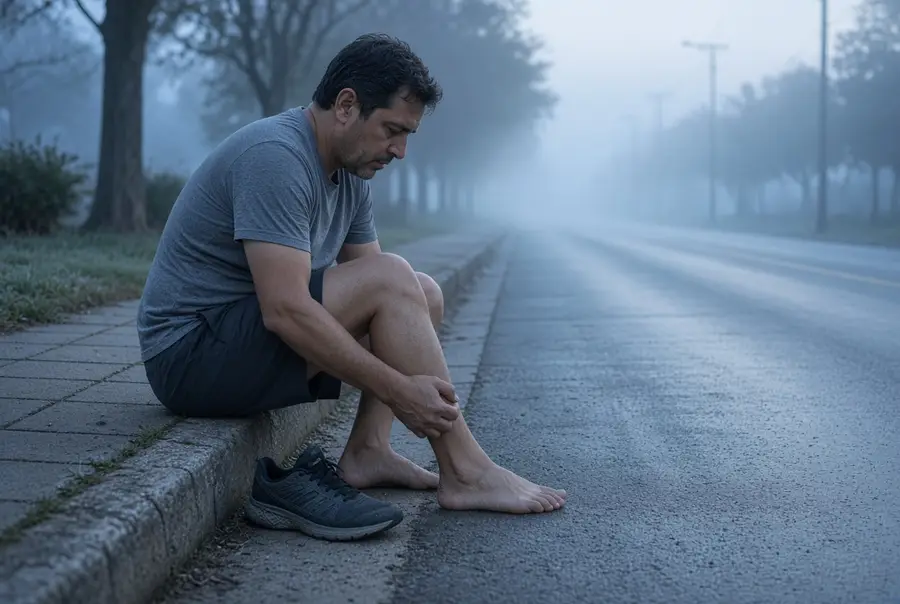
- Pain and stiffness along the back of the ankle, or just above the heel
- Soreness that is worst first thing in the morning or when you start to move
- Pain that eases as you warm up but returns after activity
- Tenderness and sometimes thickening or swelling of the tendon
- Pain climbing stairs or pushing off when walking or running
What contributes to it
The Achilles is loaded by every step, so problems usually come from too much load too soon. A jump in running mileage or intensity, hill work, sports with sudden stops and starts, tight calf muscles, worn or unsuitable footwear, and changes to training surface are all commonly mentioned. Age-related changes in the tendon also play a part.
A sudden pop is different
If you felt or heard a pop at the back of the ankle, followed by sudden pain, weakness, or difficulty pushing off or standing on your toes, that can signal an Achilles tear or rupture. That needs urgent medical evaluation, not a routine appointment. Do not wait on it.
Achilles pain versus heel pain
Pain behind the heel points toward the Achilles, while pain on the bottom of the heel points toward plantar fasciitis. The two can occur together because the calf, Achilles, and foot work as a chain. A clinician can usually tell by where it hurts and which movements provoke it.
Get evaluated first if
Do not wait on these:
- A pop or sudden weakness at the back of the ankle
- Pain after an injury, or if you cannot bear weight
- Significant swelling, redness, or warmth
- Pain that is severe or keeps getting worse despite changes in activity
- Fever with ankle or foot pain
Training and daily life
Gradual changes to load, guided by your clinician, tend to work better than all-or-nothing rest or pushing through. A physical therapist or sports clinician can look at your running or walking mechanics and footwear. Ask your provider and your physician what suits your situation.
Morning stiffness and warm-up
A telltale sign of Achilles trouble is that the first steps in the morning are stiff and sore, easing after a few minutes. That warm-up pattern is useful to tell your clinician about. A sudden increase in pain after exercise that has not eased by the next morning is a sign the load may have been too much.
Questions worth asking
Ask what your clinician thinks is irritating the tendon, whether footwear or training changes are likely to matter, how to tell a tendon problem from a tear, and when to come back if the pain persists. Bring your running shoes if you can, because worn shoes tell a story too.
If your clinician suggests ice or cold therapy
Ice is the best-known form of cold therapy, and many clinicians suggest it for sore, irritated areas. HPC is also a form of cold therapy, applied differently: high-pressure CO₂ rapidly cools the skin over the area, with an intense cold that passes quickly. A treatment takes about 3 to 6 minutes per area, where an ice pack session is often 15 to 20 minutes.
If your doctor has recommended ice or cold therapy for your problem, ask whether HPC may be a good fit. Results vary, and HPC is not a substitute for medical care.
What a visit with us looks like
Every visit starts with a free consultation. We ask where it hurts, what you have been told it is, what you have already tried, and whether anything about your health or history means we should not treat. If you are comfortable and it is appropriate, treatment can be done in the same session.
Treatment itself is brief. High-pressure CO₂ is used to rapidly cool the skin over the sore area of the Achilles tendon and the back of the heel, usually about 3 to 6 minutes per area, and a first visit typically takes 10 to 20 minutes including the consultation. There are no needles and no medication. Most people describe an intense cold that passes quickly. Same-day appointments are often available at our Mineola and Rockville Centre locations.
How many visits, and what about the next flare?
For most people, we recommend an initial series of four to five sessions, then we check how you are doing. Many patients report relief after one or two visits, although individual responses may vary. After the series, we suggest watching to see whether and when the pain returns.
If it does come back, we suggest coming in at the first sign instead of waiting for it to build. Many times a tune-up of 1 or 2 sessions is enough. Discounted packages are available at our Rockville Centre location if you expect to come in more than once.
How High-Pressure Cryotherapy may fit
HPC uses high-pressure CO₂ to rapidly cool the skin over the sore tendon. It may help calm irritation and inflammation so everyday walking and training feel more comfortable. Tendon problems range from mild irritation to long-standing change, so how much it helps depends on the individual.
It does not heal a torn tendon. For irritation, it treats the sore area and may help many people manage inflammation and symptoms.
HPC is not a substitute for medical care and does not replace a diagnosis.
Frequently asked questions
Can I be treated if I think I tore my Achilles?
No. A suspected tear or rupture needs urgent medical evaluation first.
Do I have to stop running?
Activity guidance depends on you. Ask your provider and your physician.
How many visits might it take?
For most people, we recommend an initial series of four to five sessions, then we check how you are doing. Many patients report relief after one or two visits, although individual responses may vary.
What happens at a first visit?
Every visit starts with a free consultation, a conversation where you ask questions and we explain the process. If you are comfortable, treatment can happen in the same session. Treatment takes about 3 to 6 minutes per area, and a first visit usually runs 10 to 20 minutes including the consultation. Same-day appointments are often available.
This article is educational and is not medical advice. Individual results vary.
More from Pain Education
Tendonitis or Something Else? What an Irritated Tendon Feels Like
Signs of tendonitis, how it differs from bursitis, and how High-Pressure Cryotherapy may help with tendon pain and inflammation.
Read more →Bursitis: Why a Joint Gets Swollen and Sore, and When It Needs a Doctor
What bursitis is, when redness and heat need prompt medical attention, and how High-Pressure Cryotherapy may help.
Read more →Hip Bursitis or Hip Arthritis? How to Tell Them Apart
How hip bursitis and hip arthritis differ in where they hurt, what makes them worse, and how High-Pressure Cryotherapy may help with pain and inflammation.
Read more →What patients say
Mineola
Rockville Centre
Reviews are provided by Google. Individual experiences and results vary.