
Tendonitis or Something Else? What an Irritated Tendon Feels Like
An irritated tendon can make ordinary movements, from gripping a mug to climbing stairs, feel sore and unwilling. Tendonitis is common, and it often comes from doing the same motion again and again.
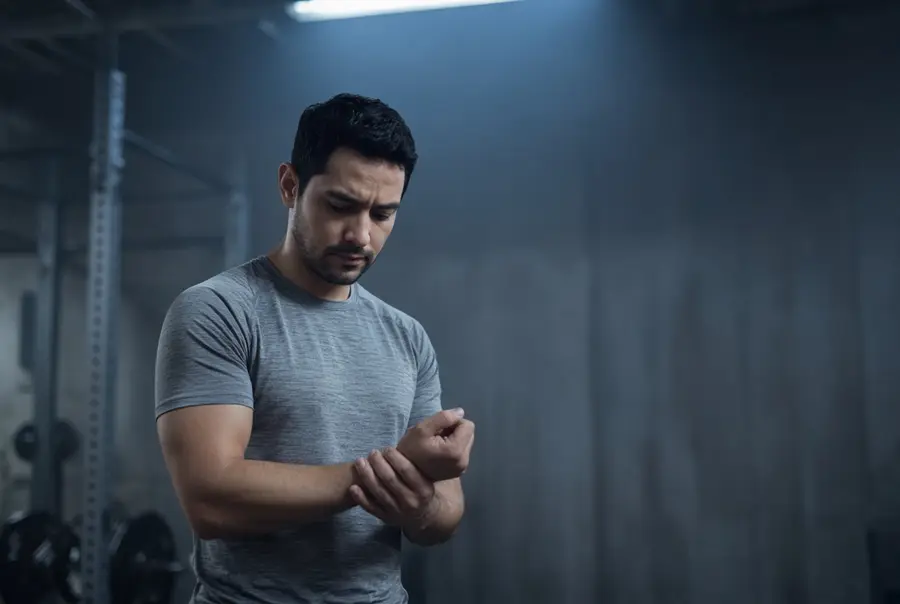
What an irritated tendon is
A tendon is the strong cord that attaches muscle to bone, letting the muscle move the joint. When a tendon is overloaded, by repetition, a sudden increase in activity, or age-related change, it can become irritated and sore. Tendonitis is the term for that irritation, and it is one of the most common reasons people feel pain around a joint.
Some tendon problems involve more than inflammation. Long-standing irritation can change the tendon itself, which is one reason a pain that has lingered for months can behave differently than a new one.
What it usually feels like
Most people describe a similar pattern:
- Pain close to a joint that increases with use
- Tenderness when you press on the tendon
- Mild swelling or warmth
- Stiffness after rest that eases a bit as you move
- Weakness or discomfort when you grip, lift, or push off
Where it tends to show up
Tendonitis can affect many places. The shoulder (rotator cuff), the elbow (tennis and golfer's elbow), the wrist and thumb, the knee (patellar tendon), the Achilles tendon, and the foot are the most common. Each has its own pattern, and a clinician can tell which tendon is involved by where it hurts and which movements provoke it.
Tendonitis versus bursitis
Tendonitis involves the tendon, while bursitis involves the small fluid-filled sac that cushions a joint. They sit close together and can occur at the same time, and the symptoms overlap. Pain with certain movements points more toward the tendon, and tenderness over a cushion that is swollen points more toward the bursa. A clinician can help sort out which one, or both.
When to get evaluated first
Do not wait on these before seeking care:
- A sudden pop followed by weakness or inability to use the joint, which can signal a tear or rupture
- Fever, spreading redness, or marked heat over the area
- Pain that is severe, getting worse, or not improving over several weeks
- Numbness or tingling that does not go away
What tends to set it off
Looking at your recent routine often shows the trigger: a new job task, a new sport, a jump in training, a different tool, or a workstation setup that keeps one joint working hard all day. If you can name it, tell your clinician. Activity guidance depends on you, so ask your provider and your physician.
Why tendons can be slow to settle
Tendons have a limited blood supply compared with muscle, and they respond to load gradually. That is part of why tendon problems can drag on, and why rushing back to the activity that caused them is a common way to restart the cycle. Gradual changes to load, guided by your clinician, tend to work better than all-or-nothing rest or pushing through.
If your clinician suggests ice or cold therapy
Ice is the best-known form of cold therapy, and many clinicians suggest it for sore, irritated areas. HPC is also a form of cold therapy, applied differently: high-pressure CO₂ rapidly cools the skin over the area, with an intense cold that passes quickly. A treatment takes about 3 to 6 minutes per area, where an ice pack session is often 15 to 20 minutes.
If your doctor has recommended ice or cold therapy for your problem, ask whether HPC may be a good fit. Results vary, and HPC is not a substitute for medical care.
What a visit with us looks like
Every visit starts with a free consultation. We ask where it hurts, what you have been told it is, what you have already tried, and whether anything about your health or history means we should not treat. If you are comfortable and it is appropriate, treatment can be done in the same session.
Treatment itself is brief. High-pressure CO₂ is used to rapidly cool the skin over the sore tendon and the area around it, usually about 3 to 6 minutes per area, and a first visit typically takes 10 to 20 minutes including the consultation. There are no needles and no medication. Most people describe an intense cold that passes quickly. Same-day appointments are often available at our Mineola and Rockville Centre locations.
How many visits, and what about the next flare?
For most people, we recommend an initial series of four to five sessions, then we check how you are doing. Many patients report relief after one or two visits, although individual responses may vary. After the series, we suggest watching to see whether and when the pain returns.
If it does come back, we suggest coming in at the first sign instead of waiting for it to build. Many times a tune-up of 1 or 2 sessions is enough. Discounted packages are available at our Rockville Centre location if you expect to come in more than once.
How High-Pressure Cryotherapy may fit
HPC uses high-pressure CO₂ to rapidly cool the skin over the sore area. It may help calm irritation and inflammation. Tendon problems range from mild irritation to long-standing damage, so how much it helps depends on the individual.
Treatment is aimed at the irritated tendon area, and for many people it may help calm inflammation and manage symptoms, though it does not reverse long-standing tendon changes.
HPC is not a substitute for medical care and does not replace a diagnosis.
Frequently asked questions
How is tendonitis different from bursitis?
Tendonitis involves the tendon. Bursitis involves the fluid-filled sac that cushions a joint. They can occur together.
What causes tendonitis?
Repetitive motion, sudden increases in activity, age-related changes, and poor technique or ergonomics are common causes.
Which tendons do you treat?
We treat the area where you have pain, such as the shoulder, elbow, wrist, knee, Achilles, or foot. We talk through the right areas at your consultation.
Should I rest completely?
Activity guidance depends on you and the tendon involved. Ask your provider and your physician.
What happens at a first visit?
Every visit starts with a free consultation, a conversation where you ask questions and we explain the process. If you are comfortable, treatment can happen in the same session. Treatment takes about 3 to 6 minutes per area, and a first visit usually runs 10 to 20 minutes including the consultation. Same-day appointments are often available.
This article is educational and is not medical advice. Individual results vary.
More from Pain Education
Achilles Tendonitis: Symptoms, Causes, and When to Get It Checked
What Achilles tendon pain feels like, what contributes to it, why a sudden pop needs urgent attention, and how High-Pressure Cryotherapy may help.
Read more →Bursitis: Why a Joint Gets Swollen and Sore, and When It Needs a Doctor
What bursitis is, when redness and heat need prompt medical attention, and how High-Pressure Cryotherapy may help.
Read more →Hip Bursitis or Hip Arthritis? How to Tell Them Apart
How hip bursitis and hip arthritis differ in where they hurt, what makes them worse, and how High-Pressure Cryotherapy may help with pain and inflammation.
Read more →What patients say
Mineola
Rockville Centre
Reviews are provided by Google. Individual experiences and results vary.